All published articles of this journal are available on ScienceDirect.

Vegetable Production and Theoretical Energy Output under an Off-grid Agrivoltaic System in Atlixco, Puebla, México
 iD
iD
Authors Info & Affiliations
Abstract
Introduction/Objective
This study represents the first exploratory, site-specific, controlled, and replicated field experiment examining an off-grid agrivoltaic (AV) system in Mexico. The primary aim is to assess the feasibility of a dual-use land strategy by comparing the performance of the AV system against traditional Open-Field (OF) cultivation practices. The specific objective is to assess the agricultural productivity (biomass and bioelements) of lettuce, radish, and cilantro, as well as the theoretical energy production of the Photovoltaic (PV) panels.
Methods
The research was conducted in Atlixco, Puebla, Mexico. A 2x3 factorial experiment (three crops x two growing conditions, AV vs. OF) with three replicates per treatment (N=3; 18 experimental units total) was conducted to measure biomass and bioelement content. Additionally, environmental variables such as solar radiation and ambient temperature were monitored to calculate the theoretical efficiency and energy output of the PV panels in the AV system. The theoretical, model-based Land Equivalent Ratio (LER) was also calculated for both systems to determine optimal land use.
Results
Statistical analysis revealed no significant differences in biomass or bioelement content for lettuce and radish between the two systems, despite reduced radiation in the AV setup. In a single hailstorm event, the AV system protected the cilantro crop from the hail damage that destroyed the equivalent of the OF crop. Additionally, the AV system demonstrated a higher theoretical model-based energy output due to lower ambient temperatures, which enhanced panel efficiency.
Discussion
The findings suggest that, under the conditions of this exploratory experiment, the partial shading provided by the AV system did not compromise crop quality or yield for lettuce and radish; the single-event hail protection observed for cilantro further illustrates a potential benefit that warrants confirmation in further studies. The thermal regulation observed beneath the panels suggests that AV systems may be particularly efficient in regions with high radiation, where heat can otherwise hinder panel performance and stress crops, although this should be confirmed under a wider range of site conditions.
Conclusion
Under the conditions of this exploratory experiment, the AV system showed land use efficiency comparable to or greater than traditional cultivation, as demonstrated by a theoretical, model-based LER above 1. This dual-use approach has the potential to optimize land use while maintaining agricultural productivity and generating renewable energy, offering a promising, site-specific starting point for integrated food and energy production in Mexico that warrants confirmation in further multi-season and multi-site studies.
1. INTRODUCTION
It is well known that food production is the most widespread use of land: 34% of ice-free land is used for this purpose, and this figure is expected to rise to 42% by 2050 [1]. This expansion implies a reduction in the land and water available for natural ecosystems [2], increased greenhouse gas emissions, deforestation, and, therefore, a loss of terrestrial biodiversity [3, 4], which generally exacerbates ecological degradation [2]. While the increase in land devoted to cultivation continues [2], so too does food insecurity, driven by factors such as the COVID-19 pandemic, climate change, and rising social inequalities [5]. In addition, agriculture is the second-largest emitter of Greenhouse Gases (GHGs) worldwide, mainly due to the use of nitrogen fertilizers, the conversion of land from forestry to agriculture [6], and the high energy costs associated with producing various plant protection products [7]. The paradox is twofold: in addition to contributing significantly to the problem, agriculture is also one of the sectors most vulnerable to its effects, particularly due to changes in soil quality and shifts in precipitation and temperature patterns [8].
In this context, a key strategy for mitigating climate change is decarbonizing energy by transitioning from fossil fuels to renewable energy sources [9]. Among these, solar Photovoltaic (PV) energy has shown the greatest dynamism and is expected to become the main source of renewable electricity by 2030 [10]. Although PV energy production can be carried out in any region of the planet, its performance can be compromised by environmental conditions [11] and by the proximity of the infrastructure required for its maintenance. This has led to the displacement of land dedicated to cultivation by PV energy production parks. For example, in Germany, over 70% of photovoltaic parks near transport routes are built on farmland [12]. In certain regions of Spain, a conflict exists between land use for cultivation and energy self-sufficiency through photovoltaic parks, leading to society's rejection of this energy source [13]. In China, modeling has shown that the current expansion of photovoltaic energy conflicts with agricultural land protection policies [14]. Studies conducted in countries with high solar radiation levels, and therefore suitable for photovoltaic installations, show that the displacement of farmland could reach up to 22% [15].
Given the challenge of achieving food security and mitigating climate change without conflict over land use, Agrivoltaics (AV) systems are becoming increasingly important. These systems combine PV energy production and food cultivation under panels, which brings with it various benefits such as increased income from dual land use, profitable cultivation under shade (protection from rain or extreme radiation), reduced wind erosion, greater water efficiency, and an improved microclimate for PV operation and new employment opportunities [16]. Different crops are grown under this system, including lettuce, potatoes, grapes, wheat, and corn. Although productivity is lower due to shading, the benefits are also reflected in energy production and can vary depending on PV configuration and environmental conditions. Therefore, conducting analyses in countries where models and simulations have not yet been thoroughly examined may be useful in this field [17].
AV systems have already been studied extensively in different regions and crops [18, 19]. In Mexico, however, AV research remains limited [19]: although AV installations exist and their operational feasibility has been reported [20-23], no peer-reviewed, controlled experimental study has yet confirmed that an AV system can be as productive as conventional Open-Field (OF) cultivation, or as efficient as a stand-alone PV installation [19]. This gap is particularly relevant given that solar energy is the fastest-growing renewable source in the country, with national production rising from 7.60 to 205.5 petajoules between 2013 and 2023 [24], a trajectory that raises the prospect of land-use conflict between energy generation and agriculture and makes it necessary to evaluate AV viability before such conflicts intensify.
To address this need, the present study conducted a controlled, replicated field experiment evaluating vegetable production under solar panels in Atlixco, Puebla, Mexico, comparing an off-grid AV system to a conventional OF system in terms of agricultural productivity, bioelements, energy production, and land-use efficiency. To our knowledge, this is the first such experiment conducted in Mexico, and it is further distinguished by: (i) a specific crop system, comprising three vegetable crops (lettuce, radish, and cilantro) that are regionally relevant to Atlixco; (ii) the off-grid configuration, which required a theoretical, model-based energy-yield estimate rather than metered grid output; and (iii) the unplanned but informative observation that the AV structure protected the cilantro crop from a hailstorm that destroyed the equivalent OF crop.
2. MATERIALS AND METHODS
2.1. Study Site
The research was conducted at the Center for Research in Horticulture and Native Plants at UPAEP University (CIHPNA, by its Spanish acronym), located in the municipality of Atlixco, Puebla, Mexico, at coordinates 18.9311551, -98.4182513. The CIHPNA is located at an altitude of 1,900 meters above sea level, with an average annual rainfall of 1,278 mm and an average temperature of 19.5°C. The physicochemical properties of the soil are pH: 6.91; organic matter: 2.06%; P: 111 ppm; K: 1149 ppm; Ca: 1085 ppm; Mg: 315 ppm; Na: 43.2; N-NO3: 44 ppm; CEC: 24, and its texture is sandy loam with a density of 1.2 g/cm3.
2.2. Agrivoltaic System Design
Three 420 W Canadian Solar modules were installed on an aluminum structure with an 18° tilt facing south. The assembly covered an area of 6 m2. The elevation of the structure was 1.8 m at the top and 0.9 m at the bottom. The three modules were installed contiguously with no inter-panel gap. For this single-row research installation, the horizontally projected module area was approximately 5.7 m2 (6 m2 module area × cos 18°), yielding a Ground Coverage Ratio (GCR) of 1.0. The species selected, based on the panel height and local production in Atlixco, Puebla, were radish (Raphanus sativus L. hybrid Red Castle, Harris Moran Seed Company®), lettuce (Lactuca sativa L. cv. Portola, Sakata Seed Corporation®), and cilantro (Coriandrum sativum L. cv. Líder, Master Seed®). A 2x3 factorial experiment (growing condition: AV vs OF; and three crops) was used in a completely randomized block design. Six treatments were evaluated with three replicates (N=3 per treatment, 18 experimental units total), each measuring 0.66 m2, in which the three different crops were grown.
2.3. Planting, Agronomic Management, and Harvesting of Crops
The experimental period extended from 7 July to 4 October 2022. Radish and cilantro were broadcast-seeded on 7 July 2022; on the same date, lettuce seeds were sown in germination trays. Radish germinated 5 days after sowing (12 July 2022) and was harvested 35 days post-germination (16 August 2022), for a total growing period of 40 days from sowing. Cilantro germinated 12 days after sowing (19 July 2022) and was harvested 60 days post-germination (17 September 2022), for a total of 72 days from sowing. Lettuce seedlings were transplanted to the field 25 days after tray sowing (1 August 2022) and harvested on 4 October 2022, following a 64-day post-transplant growing period.
A total of 30 lettuce seedlings were transplanted with five plants per experimental unit, spaced 25 cm apart. Radish and cilantro were broadcast-seeded and subsequently thinned to a final spacing of 5 cm between plants. Following germination, the AV treatment produced a total of 124 radish plants (mean: 41 per experimental unit) and 1,044 cilantro plants (mean: 348 per experimental unit); the OF treatment produced 80 radish plants (mean: 27 per experimental unit).
Weed control was performed manually across all experimental units. No additional pest or disease control measures were required. Irrigation was applied manually and uniformly to both the AV and OF treatments: daily during the first two weeks following crop establishment, and three times per week for the remainder of each crop's growing cycle, for a total applied volume of approximately 400 L per treatment over the full experimental period. Fertigation was applied throughout the irrigation period using a Steiner universal nutrient solution with the following concentrations per liter of solution: 0.1515 g of KNO3; 0.531 g of Ca(NO3)2·4H2O; 0.1305g of K2SO4; 0.1845 g of MgSO4·7H2O; and 0.02875 g of NH4H2PO4.
Throughout the growing cycle, environmental variables were recorded every 10 minutes: ambient temperature (Tamb), Relative Humidity (RH), and Soil Moisture (SM) using the GroFit® Bluetooth 2.4.1 sensor. During harvesting, the weight of each crop per experimental unit was recorded. The yield of each crop was calculated per square meter by dividing the fresh biomass of each experimental unit by its usable crop area (0.66 m2); the mean yield per treatment was then averaged across the three replicates (combined usable area: 2 m2 per treatment). The bioelement content (potassium, sodium, nitrate, and calcium) was also determined for each fresh crop using pocket ion meters (LAQUAtwin-K-11, LAQUAtwin-Na-11, LAQUAtwin-NO3-11, and LAQUAtwin-Ca-11; Horiba Scientific, Japan) to assess the nutritional value and evaluate differences between treatments.
2.4. Theoretical Evaluation of PV Energy Production
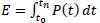
The PV panels could not be interconnected to the grid, so the energy yield assessment was theoretical and obtained using the panel power and ambient temperature data over time with the following Eqs. (1-3):
 (1)
(1)
Where:
 (2)
(2)
 (3)
(3)
P=Power
G(t)=Irradiance in W/m2 at different times
NP= Nominal Power
NOCT= Nominal Module Operating Temperature
γ= Temperature coefficient
t=time
The energy was obtained using Tamb and G(t) from data collected between July 8 and October 4. G(t) remained the same, while Tamb varied depending on the system type: Open-field (OF) or agrivoltaic (AV). The 420 W, gamma = -0.0034/°C, and NOCT = 41°C were obtained directly from the manufacturer's data [25]. The calculation was performed over the entire time period using R v 4.4.2.
2.5. Analysis of Results
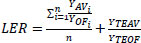
For each response variable -biomass, nitrate, calcium, potassium, and sodium a two-way ANOVA was fitted with crop (lettuce, radish, and cilantro), growing conditions (AV or OF), and the interaction as factors (df=2, 1, and 2, respectively; residual df=12 throughout). All treatments were retained in the dataset, preserving a balanced six-group (n=18) design. After fitting each model, its assumptions were checked before interpreting the results: the normality of the pooled model residuals was evaluated using the Shapiro-Wilk test, and the homogeneity of variance among the six crop x growing-conditions groups was evaluated using Levene’s test. Subsequently, a Tukey HSD post hoc test was performed to compare the effect of growing condition (AV vs. OF) within each crop. In addition, biomass and bioelement values were compared between the AV and OF radiation environments, each represented by its integrated daily radiation, obtained by integrating the received radiation in each system (OF and AV). Because this comparison involves only two system-level radiation values rather than a continuous gradient, it was treated as a categorical AV vs. OF comparison rather than as a correlation or trend analysis. To determine differences in soil moisture, a Welch's t-test was performed on the average daily temperatures for each system. All analyses were performed using R software version 4.4.2. Finally, the Land Equivalent Ratio (LER) was calculated using a modified form of the equation proposed by Chalkias and Stathatos [16] (Eq. 4):
 (4)
(4)
Where
YAVi = the agricultural yield of the i-th crop in the AV system
YOFi = the agricultural yield of the i-th crop in the OF system
YTEAV = Theoretical Energy in the AV system
YTEOF = Theoretical Energy in the OF system
3. RESULTS
A total of three crops were obtained under AV, such as radish, lettuce, and cilantro, and only two under the OF, including radish and lettuce. This was due to a hailstorm that destroyed the cilantro crop under the OF. The two-way ANOVA showed that for biomass, there were significant differences between crop type (cilantro, lettuce, radish) and the crop × growing-condition interaction (Fig. 1a); the percentage of variation was mainly explained by crop type (91.1% of total variance; partial η2 = 0.885), with the interaction accounting for an additional 8.8% (partial η2 = 0.426; Table 1). For the nutrients NO3−, Ca2+, K+, and Na+ (Fig. 1b-e), there were significant differences between crop type, growing condition, and their interaction; the percentage of variation was generally greater due to crop type (partial η2 range: 0.851–0.899; Table 1), except for NO3−, for which the crop × growing-condition interaction explained a greater percentage of total variance than crop type alone (40.8% vs. 37.0%; partial η2 = 0.863 vs. 0.851; Table 1). Post hoc analysis showed that growing conditions (AV vs. OF) were not significant for biomass productivity or for the bioelements NO3−, Ca2+, K+, and Na+ in lettuce and radish. No significant difference in soil moisture was detected between treatments (Welch's t-test: t(82.60) = 0.52, p = 0.61; AV: 74.8 ± 5.4%, OF: 74.1 ± 7.0%; 95% CI of the difference: [−1.94, 3.30]%).
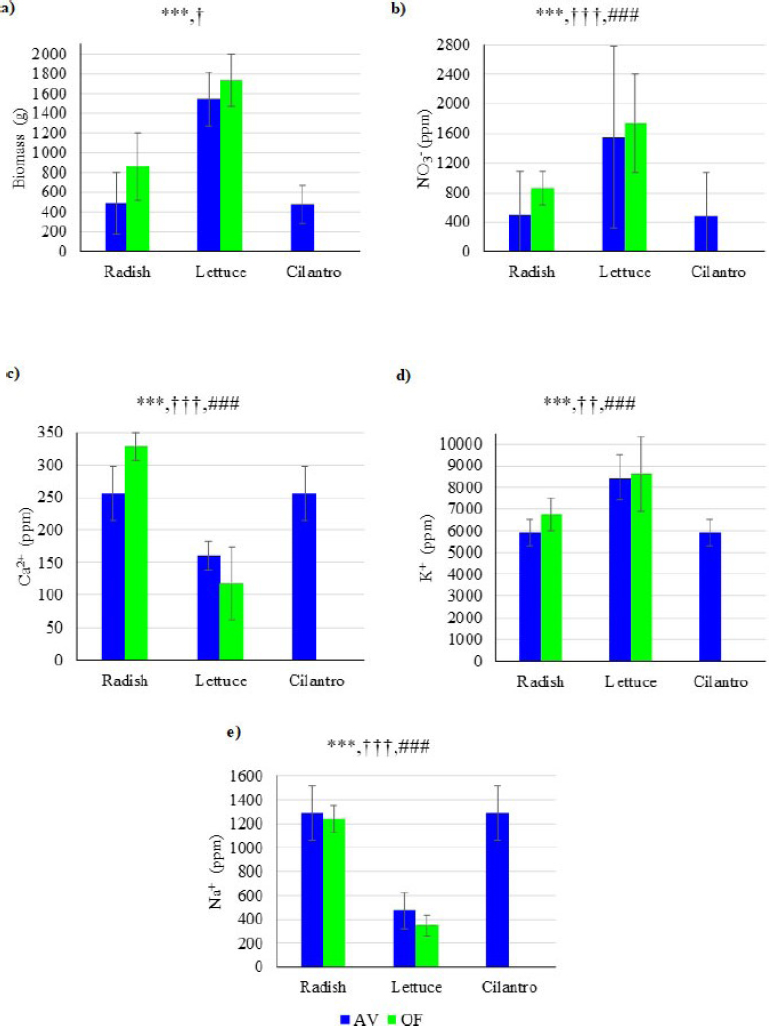
Effect of the cultivation condition Agrivoltaics (AV) or Open-Field (OF) and the type of crop: cilantro, lettuce, and radish, on productivity in terms of a) biomass, b) nitrate, c) calcium, d) potassium, and e) sodium, with its significant effect: type of crop *p ≤ 0.05, **p ≤ 0.01, ***p ≤ 0.001, growing condition #p ≤ 0.05, ##p ≤ 0.01, ###p ≤ 0.001 and the interaction between growing condition and crop type †p ≤ 0.05, ††p ≤ 0.01, †††p ≤ 0.001.
| Biomass | NO3- | Ca2+ | K+ | Na+ | |||
|---|---|---|---|---|---|---|---|
| Crop (df = 2, 12) | F | 46.03 | 34.38 | 39.59 | 53.58 | 47.12 | |
| p | 0.000002 | 0.00001 | 0.000005 | 0.000001 | 0.000002 | ||
| % | 91.1%, | 37.0 | 48.1% | 64.0% | 48.1% | ||
| Partial η2 | 0.885 | 0.851 | 0.868 | 0.899 | 0.887 | ||
|
Growing condition (df = 1, 12) |
F | 0.05 | 41.13 | 20.34 | 13.48 | 43.15 | |
| p | 0.823 | 0.00003 | 0.0007 | 0.0032 | 0.00002 | ||
| % | 0.1 | 22.2 | 12.4 | 8.1 | 22.0 | ||
| Partial η2 | 0.004 | 0.774 | 0.629 | 0.529 | 0.782 | ||
|
Crop × growing condition (df = 2, 12) |
F | 4.45 | 37.9 | 32.5 | 23.41 | 29.29 | |
| p | 0.0358 | 0.000006 | 0.00001 | 0.00007 | 0.00002 | ||
| % | 8.8 | 40.8 | 39.5 | 28 | 29.9 | ||
| Partial η2 | 0.426 | 0.863 | 0.844 | 0.796 | 0.830 | ||
| Shapiro–Wilk (model residuals) | W | 0.946 | 0.969 | 0.965 | 0.940 | 0.948 | |
| p | 0.364 | 0.772 | 0.695 | 0.286 | 0.402 | ||
|
Levene's test (df = 5, 12) |
F | 0.49 | 1.34 | 0.93 | 0.61 | 0.87 | |
| p | 0.779 | 0.312 | 0.494 | 0.698 | 0.526 | ||
| Tukey HSD: condition (AV vs. OF) | within cilantro | p_adj | 0.0118 | 0.00007 | 0.0004 | 0.00007 | 0.0006 |
| 95% CI | [-779,-175] | [-6834, -4921] | [-325, -188] | [-6866, -4934] | [-1656, -922] | ||
| within lettuce | p_adj | 0.447 | 0.418 | 0.274 | 0.889 | 0.292 | |
| 95% CI | [-433,+811] | [-2970, +1514] | [-141,+52.5] | [-3030, +3375] | [-407, +160] | ||
| within radish | p_adj | 0.239 | 0.246 | 0.058 | 0.208 | 0.757 | |
| 95% CI | [-375, +1118] | [-523, +1523] | [-3.92, +148] | [-720, +2409] | [-457, +360] | ||
For lettuce and radishes, radiation differences between systems were analyzed separately; cilantro was excluded from this analysis because production was limited by a weather event rather than by radiation differences. The radiation values reported in Table 2 (1.72 kWh/m2/day for the AV system and 6.10 kWh/m2/day for OF) reflect two system-level radiation environments rather than a continuous radiation gradient; the scatter around each value reflects day-to-day and replicate variability, not independent radiation levels. For this reason, biomass and bioelement values for both lettuce and radishes are compared as categorical values between the AV and OF radiation environments rather than as trends across continuous radiation variables, consistent with the limitation stated in the Methods. Biomass and potassium (K+) were higher under OF than under AV for both crops (Fig. 1a and d), while sodium (Na+) was higher under AV than under OF for both crops (Fig. 1e). For nitrate (NO3-) and calcium (Ca2+), values were higher under AV than under OF for lettuce, and higher under OF than under AV for radishes (Fig. 1b and c).
| Average Daily Temperature °C | Average Daily Soil Moisture % |
Average Integrated Radiation per Day
|
|
|---|---|---|---|
| AV | 19.3 ±4.88 | 74.8 ±5.4 | 1.72 ±0.42 |
| OF | 19.9 ±6.33 | 74.1 ±7.0 | 6.10 ±1.12 |
In terms of theoretical, model-based energy production, under the monitored environmental conditions, the AV system produced 359.42 kWh, while the OF system produced 356.18 kWh. In this sense, the AV system produced (theoretically) 3.24 kWh more than the open-field system. As shown in Fig. (2), at all times during the hours of highest solar radiation, and therefore the highest energy production, the Tamb of the AV system was lower than in OF, thereby increasing the panel's efficiency. On the other hand, the temperature during the hours of lowest radiation was higher in AV, indicating a lower thermal oscillation in the AV system than in the OF.
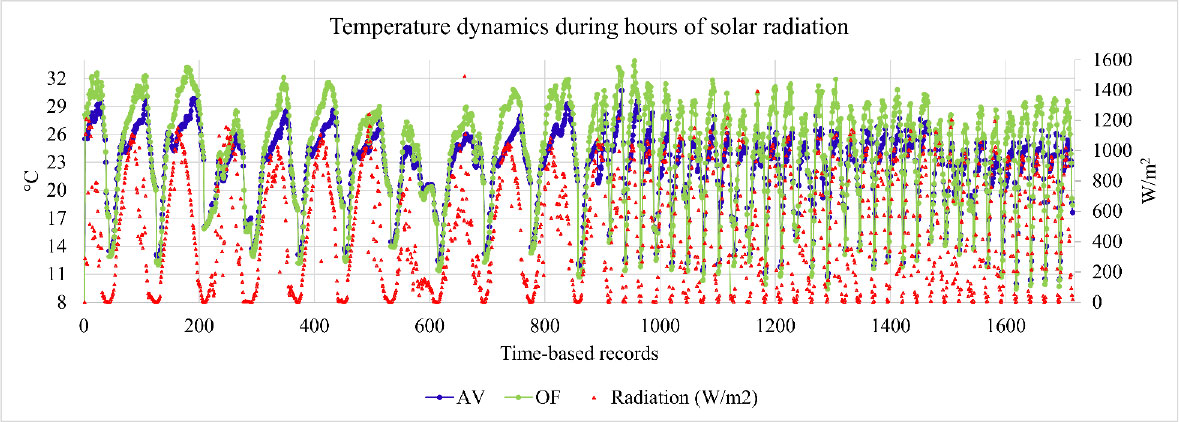
Displays the ambient temperature recorded in both the Agrivoltaic (AV) and Open Field (OF) systems during hours of solar radiation (W/m2). The temperature variation between the highest and lowest radiation levels is less pronounced in the AV system compared to the OF system.
As for the benefits of dual land use, since cilantro productivity in open fields was zero, a theoretical, model-based partial LER for the system was calculated taking only radishes and lettuce into account, which was 1.4, indicating that the AV system is more efficient in terms of land use than crops alone or energy production alone. Specifically, the LERs for radishes and lettuce were 0.9 and 1.22, respectively, indicating that if AV systems were implemented alone, radishes would not be more efficient than lettuce. However, our results suggest that the implementation of AV systems in polyculture may be more efficient in terms of land use, because although cilantro could not be used to calculate LER, the AV system was able to produce one more crop than the OF, due to the protection provided by the panels against weather conditions. This indicates that under the conditions of our experiment, agrivoltaic systems are a viable option for enhancing land use.
4. DISCUSSION
In food production, the AV system demonstrated its value during an extreme weather event by highlighting a production shortfall in OF. This finding is particularly significant in light of climate change, which is expected to increase the frequency of extreme weather events [26]. Furthermore, one of the primary advantages of AV systems in such scenarios is crop protection. Existing research predominantly emphasizes water scarcity, indicating that these systems can reduce thermal and radiative stress, improve soil moisture, and enhance water use efficiency [27, 28]. In this single-event, exploratory observation, the AV system protected the cilantro crop from the hailstorm that destroyed the equivalent OF crop, illustrating a potential benefit that warrants confirmation in further multi-season and multi-site studies.
Yield of biomass and the quantity of bioelements are of primary importance, as the present research shows that crops grown under AV systems can produce as much biomass as those grown under conventional systems. Similar results have been observed previously in lettuce, where there are no significant differences in fresh weight between greenhouse-grown lettuce and AV lettuce [29] and in weight [30] and number of leaves [30, 31] compared to OF. There are also studies in Italy where lettuce productivity was up to 37% lower in fresh weight [32] in AV. However, it should be noted that in this study, during the season when the lettuce was planted, the open-air radiation received by the crop was lower than that received by the crops in our AV system, and the ambient temperature was also lower, between 14 and 15°C, compared to around 19°C in the present study (Table 2). In Canada, it was observed that temperature increases above 27°C affect lettuce more than the amount of radiation received [33]. This indicates that the climatic conditions of each region directly affect the viability of AV systems; in Mexico, these conditions favored AV systems. Regarding radishes, as with lettuce, results vary; for example, Sturchio et al. in 2025 [34] detected a decrease in the dry weight of AV radishes compared to OF radishes. On the other hand, in bulb mass, changes were mainly due to the harvest season (spring and winter), and AV radishes grown in spring, when ambient temperatures are higher, produced higher yields under solar panels [35]. In this regard, it has been widely reported that AV systems help increase crop yield and quality by protecting crops from various abiotic stresses, such as drought, hailstorms, unfavorable light interception, and elevated temperatures [36].
In theoretical energy production, when ambient temperature is lower, cell temperature is also lower, and lower temperatures improve panel operating efficiency by decreasing series resistance [37]. In fact, the increase in ambient temperature, and therefore in cell temperature, is one of the biggest challenges in PV energy generation, and various cooling methods have been proposed to improve its efficiency [38-41]. However, these methods represent an investment in implementation or design improvements, unlike an AV system, which offers the benefit of crop acquisition. Also, the smallest variation in temperature intervals in the AV system is beneficial for crop production because, with fewer temperature fluctuations, adverse effects such as reduced germination rates, slowed growth, and chlorophyll degradation due to low temperatures can be avoided, as well as effects on growth, inhibition of seed germination, alteration of leaf morphology, reduced yield, and cell apoptosis, among others, due to high temperatures [42].
Although the results are encouraging for dual land use, further studies are needed to assess the combined effects of energy production on overall productivity. However, one reason for discouraging food production under solar panels is the reduction in radiation available for plant photosynthesis. This study demonstrated that it had no significant effect on bioelements or biomass in the crops tested.
CONCLUSION
Under the conditions of this exploratory experiment, the AV system proposed for the joint cultivation of lettuce, radish, and cilantro was statistically as productive as the OF system in terms of biomass and bioelements at this site. Although the radiation received by the AV system was lower than that in the OF system, this did not significantly affect crop productivity under these conditions. The theoretical, model-based LER of the proposed AV system was higher than 1, indicating land-use efficiency comparable to or greater than that of OF cultivation or theoretical energy production alone. This is because the crops created a microenvironment with lower temperatures, which improved the panel's efficiency, and because equivalent food gains were achieved, ensuring the land's dual use. In a single hailstorm event, the AV system protected the cilantro crop from hail damage that destroyed the equivalent OF crop, an exploratory, single-event observation that suggests a potential benefit of AV systems for crop protection under extreme weather, warranting confirmation in further multi-season and multi-site studies. Further studies of grid-connected AV systems are needed to determine whether the theoretical, model-based energy production estimated here matches the actual measured energy production.
CRITICAL ANALYSIS
This study constitutes an exploratory, proof-of-concept investigation and is subject to several methodological limitations that should be considered when interpreting the results. First, the experiment was conducted during a single growing season (July-October 2022) at one location (Atlixco, Puebla, Mexico), which limits the generalizability of the findings to other climates, soil types, seasons, or agrivoltaic configurations. Second, the sample size of three replicates per treatment (n = 3) is modest for a 2×3 factorial design and no a priori power analysis was conducted; although the large effect sizes consistently observed (partial η2 = 0.774–0.899, p < 0.001 for most factors) indicate that the study had sufficient statistical resolution to capture the primary biological signals and support the reliability of the main findings, results should be interpreted with caution.
A further statistical consideration concerns the absence of open-field cilantro data. The partial LER of 1.4, based on radish and lettuce, reflects the biological reality of the growing season. The absence of open-field cilantro data resulted from a hailstorm, an event that the AV structure effectively mitigated, protecting the cilantro crop and illustrating one of the key agronomic benefits of agrivoltaic systems in regions exposed to extreme weather events; however, it remains unknown whether including cilantro data would have yielded a higher or lower LER value.
Energy production was estimated theoretically, as the panels could not be grid-connected due to compatibility constraints; future studies with operational systems are needed to validate these values. Soil moisture was monitored continuously, though a detailed soil-plant water relations analysis (water-use efficiency, transpiration, soil water potential) was beyond the scope of this exploratory study. Likewise, a long-term economic evaluation was not included, and environmental variables were recorded at a single point per system, which may not fully reflect the spatial variability in microclimate conditions across the experimental plots.
AUTHORS’ CONTRIBUTIONS
The authors confirm their contribution to the paper as follows: M.A., L.C., T.S., J: Study conception and design; M.A., L.C., T.S., J: and P.Q., M.C.: Data collection; M.A., L.C., T.S., J, P.Q.., M.C., M.D., J.F., and O.M., L.D.: Analysis and interpretation of results; M.A., L.C, T.S, J.: Draft manuscript. All authors reviewed the results and approved the final version of the manuscript.
LIST OF ABBREVIATIONS
| AV | = Agrivoltaic |
| OF | = Open Field |
| PV | = Photovoltaic |
| LER | = Land Equivalent Ratio |
| Tamb | = Ambient Temperature |
| RH | = Relative Humidity |
| SM | = Soil Moisture |
| NOCT | = Nominal Module Operating Temperature |
| NP | = Nominal Power |
| CIHPNA | = Centro de Investigación en Horticultura y Plantas Nativas |
HUMAN AND ANIMAL RIGHTS
All experiments were conducted on legally sourced commercial cultivated plant species (lettuce, radish, and cilantro) under standard agricultural conditions. Ethical approval was therefore not required.
AVAILABILITY OF DATA AND MATERIALS
The data supporting the findings of this article are available in the Zenodo repository at https:// zenodo.org/records/21923481 (https://doi.org/10.5281/ zenodo.21923481).
FUNDING
This study was funded by Secretariat of Science, Humanities, Technology and Innovation (SECIHTI, by its Spanish acronym; formerly CONACYT). Funder ID: 501100003141. Grant number: PNPC-004243 (postgraduate scholarship awarded to M.C. Padilla- Quiñonez); and Award: SNII distinction awarded to L.C. Muñoz-Arenas (CVU 215169), J. Terrones-Salgado (CVU 507517), J.F. Méndez-Díaz (CVU 292499), and L.D. Ortega-Martínez (CVU 228175).
The study was also funded by Vice-Rector's Office for Research, Universidad Popular Autónoma del Estado de Puebla (UPAEP). Award/Grant number: N/A (institutional research support).
ACKNOWLEDGEMENTS
The authors wish to express their sincere gratitude for the financial support provided through the postgraduate scholarship awarded to Padilla-Quiñonez. Additionally, they would like to acknowledge the SNII distinction granted by the Secretariat of Science, Humanities, Technology, and Innovation (SECIHTI) to the other authors. They also thank CIHPNA and Dr. José Juan Zamorano Mendoza for facilitating the project, as well as the Vice-Rector's Office for Research at UPAEP for providing financial support.